If you’ve ever tried to write a short story and ended up with a “Chapter One” that’s secretly the start of a 90,000-word novel… you’re not alone.
Short stories are weirdly hard. Not because they’re “smaller” (they are), but because they require a different kind of control. You don’t get the luxury of sprawling subplots, long warm-up chapters, or “I’ll explain later” worldbuilding. In short fiction, every paragraph has to earn its place.
So let’s talk about how to write a short story in a way that actually works—from finding the right idea to sticking the landing with an ending that hits.
We’ll cover:
- How to choose a short story idea (not a novel idea in disguise)
- What makes a short story feel cohesive
- The “crux” of a short story (the thing it’s really about)
- Structure basics: inciting incident, escalation, climax
- Character, setting, voice, and tone
- Editing for concision and impact
Let’s do it.
What Makes a Short Story Different From a Novel?
Here’s the simplest distinction that helps so much:
- A novel usually focuses on a journey that transforms a character over time.
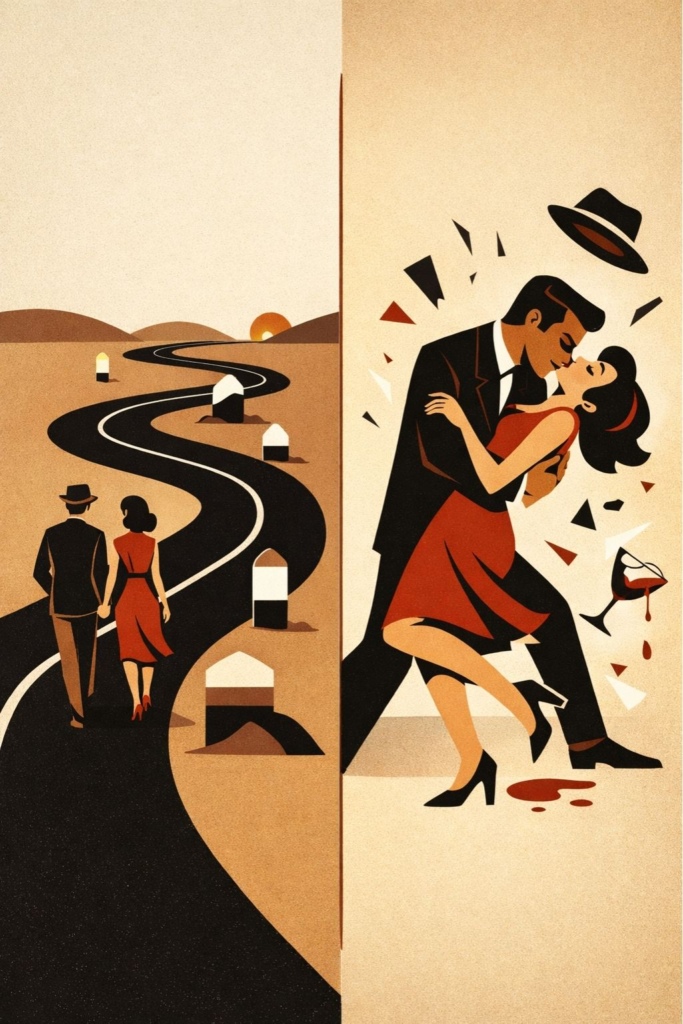
- A short story usually focuses on an event that changes or reveals a character.
That’s the key: short stories aren’t about covering a long transformation arc. They’re about zooming in on a moment (or a handful of moments) where something cracks open.
This is why people struggle: they pick an idea that needs a long runway. If your premise requires:
- multiple locations
- a long timeline
- several major character arcs
- complex politics/history/lore
- tons of “before this makes sense…”
…it might be a novel premise. (And if you do decide it should be a novel instead, here’s a step-by-step guide on how to start a novel.
A good short story idea tends to be more like:
- one intense decision
- one relationship under pressure
- one disturbing discovery
- one event that forces a truth to surface
- one moment where the reader’s understanding shifts
Important note though: short stories don’t have to be “simple.” In fact, short fiction is one of the best places to get experimental and weird. It’s way easier to sustain an experiment for 2,000–8,000 words than for 90,000.
So don’t be afraid of bizarre. Just make sure it’s focused.
Step 1: Start With the “Crux” (Even If You Don’t Know It Yet)
At some point in writing a short story, you’ll want to identify what I’ll call the crux.
The crux is the deep thing the story is really circling. It’s not exactly the theme. It’s more like:
- what you want to reveal about your character
- the emotional truth under the surface
- the thing that explains why this story matters
If your character were in therapy, the crux would be the thing the therapist would spend years digging toward.
And here’s the best part: you don’t have to know the crux in draft one. A lot of writers discover it while drafting. Then revision is where you sharpen everything so it points cleanly at that crux.
In practice, your drafting process might look like:
- Start with an interesting situation
- Write to see what the story becomes
- Realize the story is actually about X
- Revise to aim every element toward X
That’s normal. That’s good.
Step 2: Choose a Single Emotional “Note” (Tone Is Everything)
Short stories usually work best when they’re steeped in one central feeling.
A novel can roam emotionally: comedy → heartbreak → action → calm → horror → romance. Short fiction usually doesn’t have room for that range.
So ask:
- What emotion should the reader sit in?
- What atmosphere do I want?
- What tone fits the story’s crux?
Examples:
- grief-soaked and quiet
- tense and claustrophobic
- eerie and dreamlike
- bitterly funny
- tender but unsettling
This helps with everything—word choice, pacing, imagery, even point of view. When a short story is really good, it often feels like it has one clear mood running through it like a current.
Step 3: Don’t Start With “Theme.” Start With Event + Character.
A common short story trap: trying to “write about a theme.”
Like:
“I want to write about loneliness.”
“I want to make a statement about society.”
“I want to explore what it means to be human.”
That’s not wrong, but it can make stories floaty and preachy fast—especially in short form.
Instead, stay grounded in:
- a specific character
- a specific event
- a specific pressure
Try this approach:
- What happens?
- Who does it happen to?
- Why does it matter to them?
Also, permission slip: a short story can exist just to be an interesting story. Not every piece of short fiction needs to deliver a philosophical mic-drop. Sometimes the “point” is: look at this fascinating person in a fascinating situation.
Still, you want intention. Even if your goal is simply “tell a compelling story,” that’s a purpose—and you can revise toward it.
The Core Rule of Short Stories: Unity
If I had to give you one big principle for writing short fiction, it’s this:
Short stories thrive on unity and cohesion.
Because you have limited space, everything needs to feel like it belongs in the same ecosystem:
- character
- setting
- conflict
- voice
- imagery
- structure
- even sentence rhythm
In a novel, you can afford detours. In a short story, detours feel like sabotage.
A useful editing question:
If I remove this paragraph/scene/detail, does the story lose power?
If not, cut it.
That’s not you being “mean to your writing.” That’s you building a story that punches harder.
A Simple Short Story Skeleton You Can Use
You don’t need a strict template like the Hero’s Journey or Save the Cat. Those are designed for long-form storytelling.
But it does help to understand short story structure in its simplest form.
Here’s a clean breakdown:
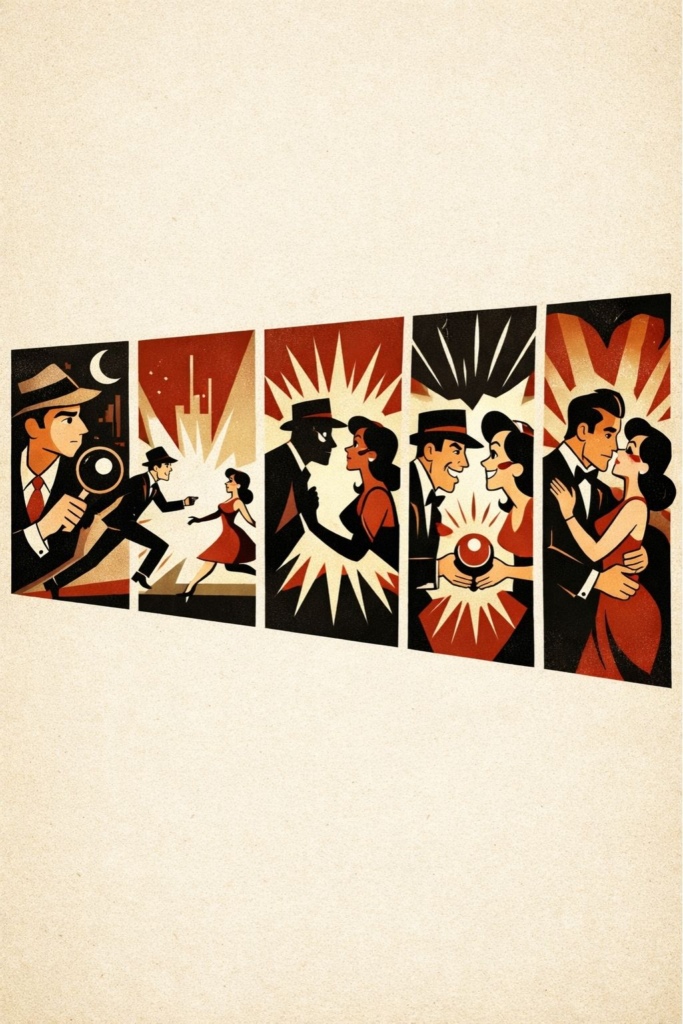
1) A character who yearns for something
They want something external (a goal), and they want something internal (a deeper reason).
- External goal: what they think they want
- Internal desire: why they want it / what they’re trying to fix, prove, hide, or earn
That “why” is often where the crux lives.
2) Forces of antagonism (conflict)
You can think of conflict in three categories:
- Societal conflict: the world/system/setting pressures them
- Interpersonal conflict: another person pushes back
- Internal conflict: they sabotage themselves, fear something, refuse truth
Not every story has all three, but internal conflict is almost always doing something in strong character-driven short fiction.
3) Inciting incident
The moment that kicks the story into motion. In short stories, the inciting incident often happens early—sometimes immediately.
4) A chain of escalating events
Each beat should pressure the character more. Tension should rise.
5) Climax
Usually a choice or a revelation (and the strongest endings often include both).
Step 4: Plot and Structure Tips That Actually Help
You need an inciting incident and a climax
Most short stories benefit from having both on the page. Yes, there are experimental exceptions. But if you’re learning, don’t skip these.
Also: in a short story, the inciting incident can be a single sentence. Same with the climax.
Focus on the “core event”
Short stories often orbit one key event:
- the burning of something
- a confession
- a betrayal
- a birth, death, breakup, decision
- a discovery
- an arrival
- a disappearance
Even if the event happens near the end, the story is built in relation to it.
When you know the core event, you can evaluate scenes more brutally:
- Is this scene building toward the event?
- Is it a reaction to the event?
- Is it revealing something essential about the character because of the event?
If not, it’s probably extraneous.
Avoid extraneous scenes like your life depends on it
If your short story has 4 scenes and 1 scene is unnecessary, you just lost 25% of your story’s momentum.
Short fiction rewards efficiency:
- fewer scenes
- sharper scenes
- scenes that do multiple jobs (character + tension + setting + theme)
Make sure events connect causally
Even if you write non-linear short stories with flashbacks, the reader needs to feel a reason for every shift.
A great check:
If I lay the events out in chronological order, does A cause B, and B cause C?
And if you’re using a flashback:
Does the present moment trigger the flashback in a meaningful way?
Condense your timeline
This is a huge clarity booster.
Short stories get confusing when:
- too much time passes
- the story keeps jumping around
- the reader has to constantly re-orient
Often you can tighten a story by changing:
- “They decided three months ago…” → “They decide now.”
- “Weeks later…” → “That night.”
It makes the narrative cleaner and more intense.
Cut the “connective tissue”
This is the stuff that bridges scenes but isn’t the scene:
- travel time
- greetings and goodbyes
- “and then they went to…”
- filler actions
- unnecessary explanations
Jump into the moment where something is happening.
Raise tension, don’t resolve it (until the end)
In short stories, tension should typically climb without being neatly released.
Instead of:
- raise tension → resolve → raise tension → resolve
Try:
- raise tension → raise tension → raise tension → climax
Every scene should tighten the coil.
Step 5: Endings That Hit: Choice or Revelation
Most short story endings land in one of two places:
- the character makes a choice
- the character has a revelation
A choice-ending tends to feel more powerful because it’s active. But even revelation endings can work if they genuinely shift the reader’s understanding.
A strong ending reveals something true:
- about who the character is
- what they really wanted
- what they’re capable of
- what they refuse to admit
- what has changed (even subtly)
Also, short stories often don’t do long falling action. They tend to end close to the climax, sometimes right on the moment of impact.
Step 6: Nail the Beginning With a Hook
Beginnings matter in novels. They matter even more in short fiction—especially if you’re submitting to magazines or sharing online where attention is brutally limited.
You don’t need a gimmick. You need interest.
A strong first line often does one (or more) of these:
- creates curiosity
- drops us into motion
- makes a surprising claim
- gives a vivid image
- hints at conflict
- establishes voice instantly
Examples of hook styles:
- Image hook: “The greenhouse was full of moths the size of thumbs.”
- Voice hook: “I’ve never been good at keeping people alive.”
- Conflict hook: “By the time my sister found the knife, I’d already decided to lie.”
- Curiosity hook: “We buried the phone first.”
The goal isn’t to be random. It’s to make the reader lean forward.
Step 7: Character Is the Engine of Short Fiction
Because you don’t have a ton of space for elaborate plot architecture, short stories often live or die by character.
Give the reader enough concrete info
Some authors love leaving everything vague. That’s a stylistic choice.
But for many short stories—especially longer short stories—clarity helps. Readers often like to know:
- age range
- what the character looks like (a few key traits)
- what they do (job/school/life role)
- what kind of person they seem to be at first
The key is not dumping info. It’s choosing a few specific details that do a lot of work.
Specificity beats quantity
Instead of ten generic details, give two sharp ones.
Generic:
- “He was tall and tired.”
Specific:
- “He kept rubbing the crescent scar on his wrist like it was a worry stone.”
One weird, precise detail can carry a character through an entire piece.
Let the character surprise us
Short stories are especially satisfying when the reader’s understanding shifts:
- the character does something unexpected
- a hidden motive comes into view
- a “type” becomes a person
- the character reveals a contradiction
Surprise works best when it’s still congruent with who they are. You want the reader to think:
I didn’t expect that… but of course they would.
That’s gold.
Step 8: Use Setting Like a Weapon
Setting isn’t just a backdrop. In short fiction, setting can do a ton of heavy lifting.
A vivid or unusual setting:
- creates instant atmosphere
- gives the reader something concrete
- supports the tone
- generates conflict
- gives characters actions to perform (not just thoughts)
A conversation in a kitchen can be fine.
But a conversation while:
- tending a carnivorous greenhouse
- repairing a failing space station
- sorting through a hoarder’s house
- babysitting a possessed doll collection
…suddenly becomes a story.
Setting can also act like a mirror for the character’s internal state, reinforcing the crux through imagery and mood.
Step 9: Form and Point of View Should Match the Story
A big short story superpower is unity of form and concept.
Meaning: the way you tell the story should fit what the story is about.
This starts with point of view:
- 1st person can feel intimate, confessional, trapped in a mind
- close 3rd can balance intimacy with flexibility
- omniscient can create distance or fable-like tone
- 2nd person can feel eerie, accusatory, hypnotic (hard but cool)
Ask:
- What POV best reveals the crux?
- What POV creates the right emotional effect?
- What POV makes the central tension sharper?
Short stories are also a great place to experiment with form:
- segmented structure
- epistolary (letters, texts)
- lists, transcripts, reports
- an inanimate narrator
- nonlinear memory collage
Because it’s short, you can get weird without committing your whole life to it.
(And if you’re the kind of writer who likes planning, you can absolutely borrow structure tools from long-form writing—just keep them lightweight. This guide on how to outline a novel can still help you think in beats and escalation, even for short fiction.
Step 10: Line-Level Writing Tips for Short Stories
Don’t be scared of a strange voice
Short fiction is where voice can shine. Because you’re not sustaining it for 400 pages, you can do something bold:
- stylized diction
- rhythmic repetition
- fragmented sentences
- poetic imagery
- dark humor
Show more than you tell… but don’t worship mystery
Here’s the truth: in short stories, withholding too much information can backfire.
You want the reader asking questions—but you don’t want them confused.
If the reader needs a piece of information to understand the story, give it to them. One clean sentence of exposition early is better than a reader being lost for 2,500 words.
Exposition isn’t evil. Boring exposition is evil.
Make it sharp. Make it vivid. Move on.
Build unity through word choice and imagery
Choose images that fit the story’s emotional note.
If the story’s tone is claustrophobic, your imagery might include:
- tight spaces
- pressing heat
- trapped breath
- closed doors
- crushing silence
If the tone is dreamy:
- soft edges
- blurred light
- drifting sounds
- melting time
This is how short stories feel cohesive at the sentence level.
A Practical Process You Can Use (Even If You Don’t Outline)
You can outline. You can discovery-write. Either works.
A super workable short story process looks like this:
Drafting
- Start with an image, moment, or event
- Put a character in it
- Let them want something
- Pressure them with conflict
- Keep escalating until a choice or revelation
- End close to the impact
If you discovery-write, try writing “sentence by sentence” like:
- write what feels necessary
- follow the next most charged moment
- stay alert for accidental details that become the story’s backbone
Revising
Revision is where the story becomes a story.
Focus on two main things:
1) Be concise
- cut filler
- cut repeated ideas
- cut scenes that don’t escalate tension
- cut explanations that the story already implies
2) Refine the crux
Once you know what the story is really about, revise so that:
- every scene contributes to it
- every image reinforces it
- nothing contradicts it accidentally
- the ending delivers it
A helpful final revision question:
Does this story feel like one unified thing?
If not, tighten.
(If you want a beginner-friendly walkthrough that pairs nicely with this short story guide, your “writing your first story” post is a perfect next step.
Quick Checklist: Before You Call It Done
Use this as a final sweep:
- Do I know the core event of the story?
- Does the story reveal or change something about the character?
- Is the tone consistent and intentional?
- Do scenes connect causally?
- Does tension rise throughout?
- Are there any extraneous scenes or “connective tissue”?
- Is the beginning interesting immediately?
- Does the ending land with choice or revelation?
- Does every detail feel like it belongs?
If you can say yes to most of these, you’re in a really strong place.
Final Thoughts: Short Stories Are a Training Ground (and a Playground)
Short stories teach you focus. They teach you restraint. They teach you how to make a scene do five jobs at once.
And they’re also the best space to experiment—voice, form, structure, weird ideas, strange settings, bold endings—without needing to commit to a whole novel.
So if you’ve been telling yourself you “can’t write short stories,” try reframing it:
You don’t need smaller ideas.
You need sharper focus.
And now you’ve got a map.